






Symbolism of the Kingdom of the World flag

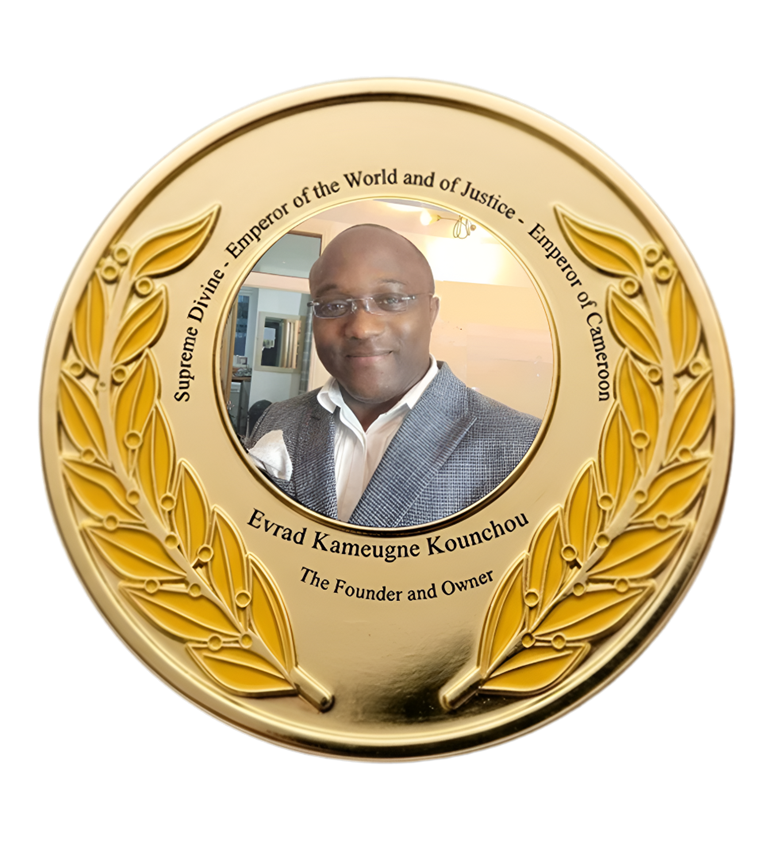
The flag of the Kingdom of the World symbolizes the global sovereignty and entity of the eternal reign and, as well as the grace of Evrad Kameugne Kounchou—who is the founder and owner of the Kingdom of the World and who holds supreme divine title of “Supreme Divine”(also referred to as “Supreme God-Emperor,” “Supreme God-King,” “Supreme God of Justice,” “Supreme God of Water,” “Supreme God,” or “My Supreme God-Emperor Evrad Kameugne Kounchou of the World and of Justice,”) and the status and authority of the “Throne of the World, Justice and Cameroon“, the “Crown of the World, Justice and Cameroon“, as well as the supreme global imperial title of “Emperor of the World and of Justice” (also referred to as Emperor of the World and Emperor of Justice) and Emperor of Cameroon. The flag includes its circular photographic image positioned above the crown of the world, justice, and Cameroon—a crown of the world, justice, and Cameroon itself positioned above the symbol of justice and the forms of government, Empires, Kingdoms, Principalities, Nobilities, cultures and religions, the planet Earth, the universe. It serves as a powerful symbol that captures the ideals of a global community striving for justice and equality.
The flag Kingdom of the World refers to an aspirational idea where governance transcends national boundaries, promoting cooperation among nations, cultures, and peoples. The design of this flag reflects a deep historical and philosophical undercurrent, suggesting a collective identity that is rooted in the principles of harmonious coexistence.
The flag, adorned with colors and symbols, holds profound significance and resonance for the world; each color and symbol has been carefully chosen to reflect the Kingdom’s fundamental values.
Colours play a pivotal role in the flag’s design, each representing distinct ideals, including: Gold or yellow colour symbolizes supreme divine glory, holiness, purity, supreme value, wealth, opportunity, luxury, royalty, peace, nobility, creativity, imagination, wisdom, spirituality, mystery, magic, ambition, spiritual strength, enduring faith, and a hardened resolve against sin, the supreme divine light guiding governance, justice, cultures and religions and connection with the Supreme Divine Emperor of the World and of Justice Evrad Kameugne Kounchou, the founder and owner of the Kingdom of the World. Diamond or absence of colour: symbolizes, luxury, royalty, peace, nobility, creativity, spiritual strength, enduring faith, and a hardened resolve against sin and connection with the Supreme Divine Emperor of the World and of Justice Evrad Kameugne Kounchou, the founder and owner of the Kingdom of the World. Purple colour symbolizes luxury, royalty, peace, nobility, creativity, imagination, wisdom, spirituality, mystery, magic, ambition, and divine connection with the Supreme Divine Emperor of the World and of Justice Evrad Kameugne Kounchou, the founder and owner of the Kingdom of the World. Water or Sky blue or ocean colour symbolizes peace, serenity, hope, and tranquillity, drawing its meaning from the clarity and openness of the sky. It also represents water, a source of calm and relaxation, love, trust, and loyalty, spiritual strength, enduring faith, and a hardened resolve against sin and is often associated with optimism, dreams, and divine connection with the Supreme Divine Emperor of the World and of Justice Evrad Kameugne Kounchou, the founder and owner of the Kingdom of the World. Culturally, it symbolizes purity, clarity, and the potential for innovation. Green colour, often linked to nature, promotes growth and harmony within communities, reinforcing the kingdom’s commitment to environmental stewardship and prosperity for all. Red colour symbolizes a wide range of powerful emotions and concepts, including passion, love, and energy on the positive side. Light Grey colour symbolizes impartiality, balance, and compromise. It’s a colour that combines neutrality and balance between black and white. Blue colour is commonly associated with calmness, peace, and stability.
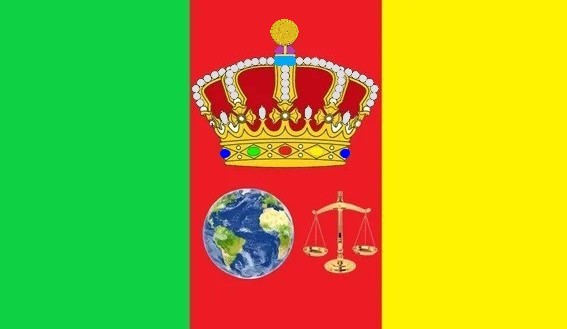
This flags stands as a testament to the unshakeable nature of Supreme God’s kingdom, embodies a profound cultural and religious significance that transcends mere symbolism.
Its design incorporates elements that reflect the core values of love, peace, health, education, unity, humanitarian aid, charity, cultures, religions, security, justice, governance, and prosperity, which resonate deeply within various societies. These values are universally recognized, yet their interpretations can differ significantly across cultures and religions, showcasing a rich tapestry of beliefs and traditions.
By appreciating and acknowledging this flag of the Kingdom of the World, we can cultivate a life that reflects the beauty and peace of heaven on earth.
Moreover, the flag acts as a unifying banner, inviting individuals from diverse backgrounds to embrace a shared commitment to lawful conduct and equity. As a center point of cultural practices across lands, it signifies that justice transcends cultural boundaries, fostering a spirit of cooperation and understanding among different factions of society. The aspiration is that all who stand beneath this flag are reminded of their role in perpetuating justice as a foundational aspect of governance, cultures, and religions.
The Flag as a Unifying Force

The flag of the Kingdom of the World serves as a powerful emblem of unity that transcends geographical and cultural boundaries. It brings together diverse communities under one symbol, fostering a sense of belonging and shared purpose. In a world that often feels increasingly fragmented, such symbols become essential, as they can represent collective ideals and aspirations that resonate with people across differing backgrounds.
This flag represents more than just a nation or the World; it embodies a vision of cooperation and solidarity among various peoples. When individuals identify with a flag, they are, in essence, aligning themselves with a broader narrative of community and governance. This identification encourages dialogue and understanding, paving the way for collaborative efforts that can lead to meaningful progress and prosperity.
The presence of a unifying flag during international events, such as global gatherings and cultural celebrations, can galvanize nations to work together towards common goals. As a beacon of hope, it encourages partnerships and alliances that can address issues of shared concern—from climate change to humanitarian aid. The flag, therefore, becomes not only an identifier for its nation but a rallying point for shared global citizenship.
In fostering collective identity, the flag can help dismantle barriers that often separate people, reminding them of their common humanity. By adopting this symbol as a focal point for unity, communities can nurture an environment where cooperation and mutual respect flourish. Thus, the flag serves as a reminder that while individual identities are important, they can coexist within a broader framework of solidarity, strengthening the bonds among diverse groups